


Exploring the Wisdom of Great Thinkers to Reboot Your Own Life
By Kyu-jin Lee, Ph.D.
Are you happy?
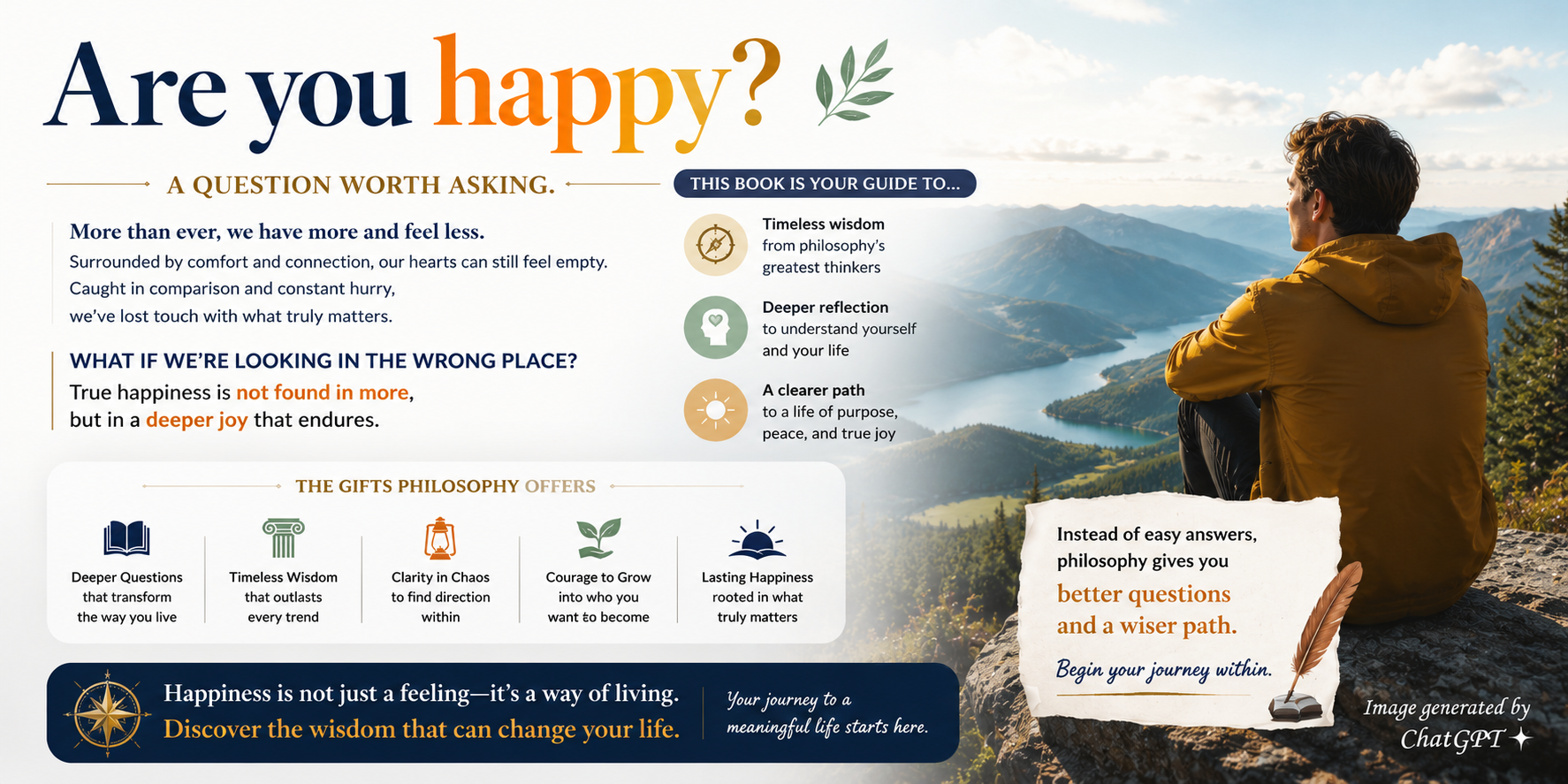
Before this most fundamental question that encompasses our lives, how many of us can truly answer, “Yes”? Never in human history has there been an era so overflowing with material abundance. Dazzling technological advancements make our lives incomparably convenient, and social media is filled with moments that appear glamorous and joyful.
Are you happy?
Paradoxically, however, our hearts feel more empty and anxious than ever before. Comparing ourselves to others has become a daily routine, and swept away by a world that screams “more” and “faster,” we have lost the time to look into our own hearts. Happiness seems close, as if we could grasp it, but it often scatters like a mirage the moment we try to hold it.
Perhaps we are searching for happiness at the wrong address? Shouldn’t we be looking for a deep, serene joy that can take firm root amidst the turbulence of life, rather than looking for more stimulating, immediate pleasures? This is precisely where philosophy approaches us. Rather than handing us an easy answer, philosophy serves as the oldest and wisest guide, leading us to reflect for ourselves on the path to happiness. This book is a journey into those records of thought.
The Journey of Happiness Through Philosophy
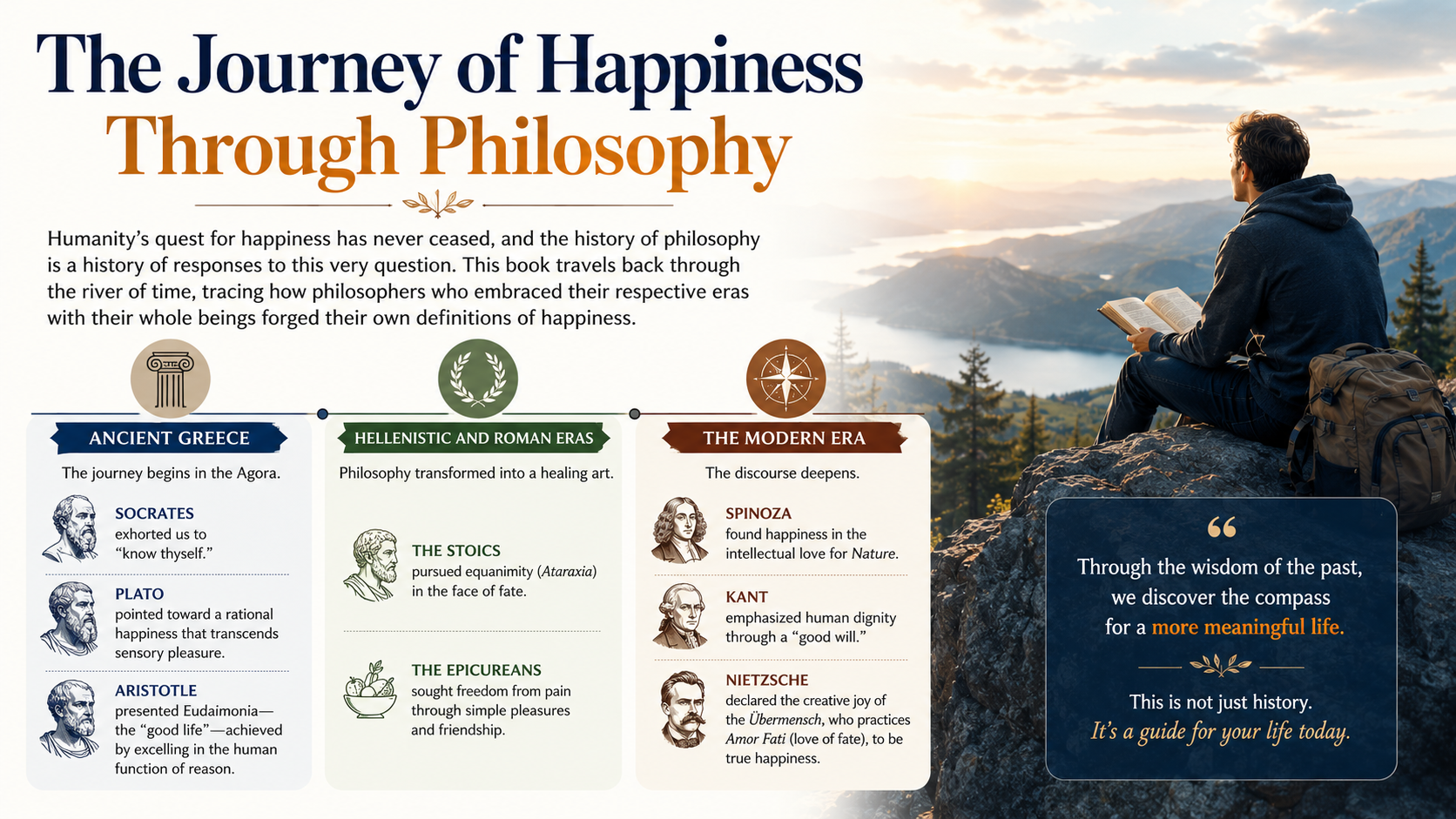
Humanity’s quest for happiness has never ceased, and the history of philosophy is a history of responses to this very question. This book travels back through the river of time, tracing how philosophers who embraced their respective eras with their whole beings forged their own definitions of happiness.
The Journey of Happiness Through Philosophy
-
Ancient Greece: The journey begins in the Agora. Socrates exhorted us to “know thyself,” while Plato pointed toward a rational happiness that transcends sensory pleasure. Aristotle presented Eudaimonia—the “good life”—achieved by excelling in the human function of reason.
-
Hellenistic and Roman Eras: Philosophy transformed into a healing art. The Stoics pursued equanimity (Ataraxia) in the face of fate, while the Epicureans sought freedom from pain through simple pleasures and friendship.
-
The Modern Era: The discourse deepens. Spinoza found happiness in the intellectual love for Nature; Kant emphasized human dignity through a “good will”; and Nietzsche declared the creative joy of the Übermensch, who practices Amor Fati (love of fate), to be true happiness.
How to Read This Book
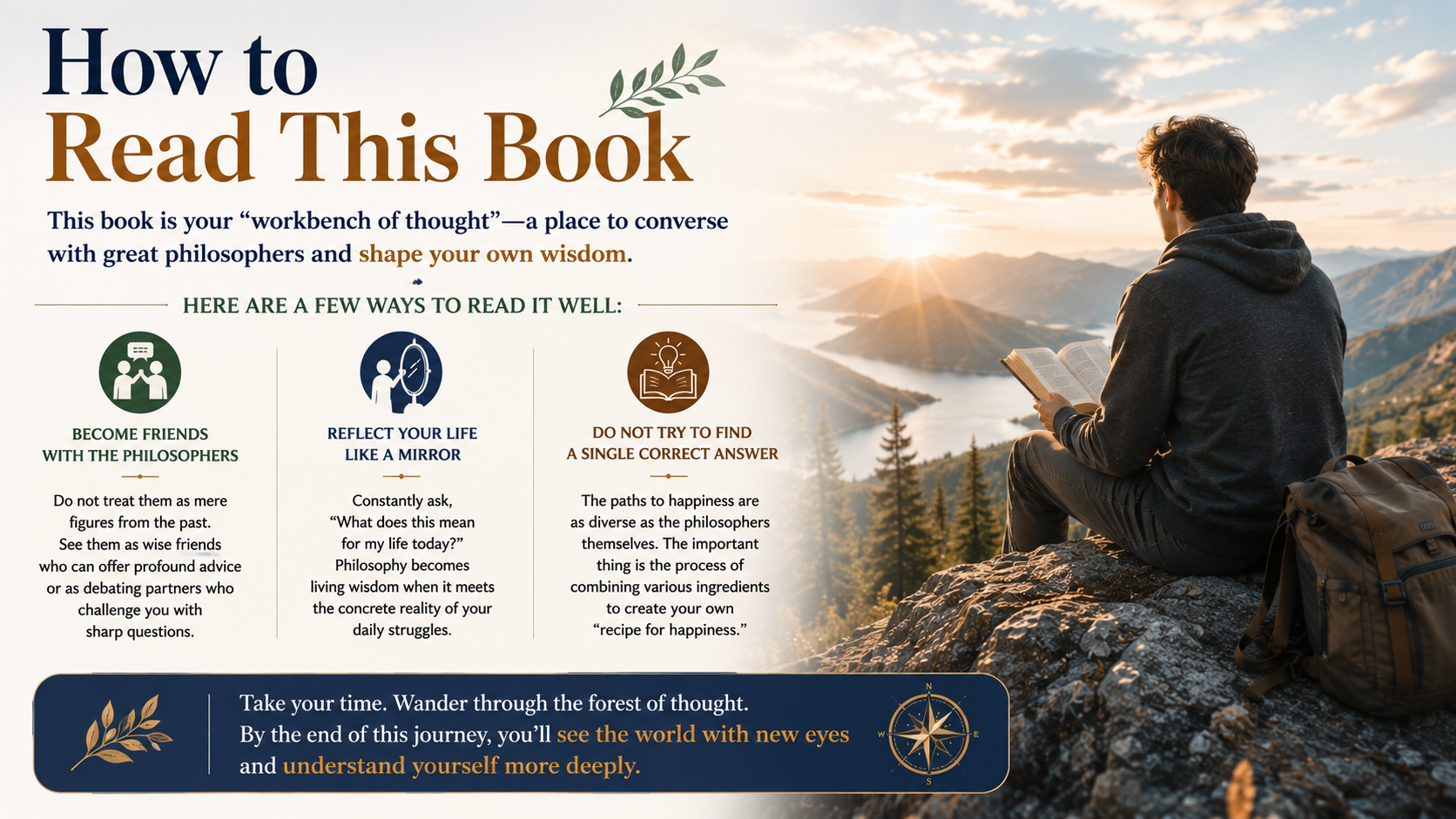
This book is not a repository of deep, scholarly discourse; rather, it is a “workbench of thought” where you can converse directly with great philosophers. I suggest a few ways to read this book effectively:
How to Read This Book
-
Become friends with the philosophers: Do not treat them as mere figures from the past. See them as wise friends who can offer profound advice or as debating partners who challenge you with sharp questions.
-
Reflect your life like a mirror: Constantly ask, “What does this mean for my life today?” Philosophy becomes living wisdom when it meets the concrete reality of your daily struggles.
-
Do not try to find a single correct answer: The paths to happiness are as diverse as the philosophers themselves. The important thing is the process of combining various ingredients to create your own “recipe for happiness.”
Please take your time, and whenever you have a moment, stroll leisurely through the forest of thought. By the end of this journey, you will see the world through different eyes and come to a deeper understanding of yourself.
Note: This article is an English adaptation of the original Korean essay, “철학 속 행복의 여정 (The Journey of Happiness Through Philosophy),” written by Kyu-jin Lee, Ph.D.